The complaint is vague, the causes are not
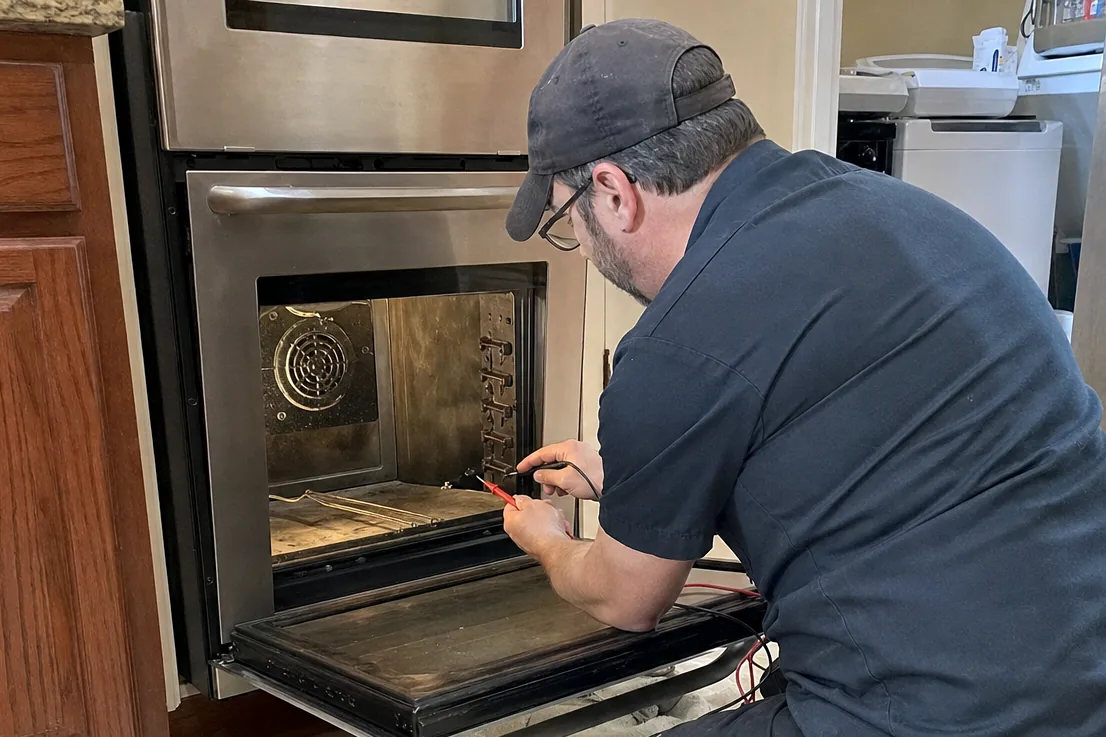
“It is not steaming properly” covers several completely different machines. A steam oven is a small system with four jobs: get water into the generator, heat it, know how much of it there is, and keep the vapour inside the cavity. Weak or absent steam means one of those four has stopped working, and they are separable in about twenty minutes if you take them in order.
The expensive assumption is that weak steam means a failed generator. Sometimes it does. More often the generator is fine and is being starved, misinformed or undone by a door that no longer seals.
Heat: is the generator reaching temperature at all
Start here, because it is the fastest to eliminate. If the generator is not getting to temperature, nothing downstream matters.
The failure presents as a cycle that runs its full length with the cavity barely warming and no visible vapour, often with no complaint from the appliance because it believes it is doing its job. On the bench that is a heating element that has gone open circuit, a thermal cutout that has tripped and not reset, or a supply problem upstream of the appliance rather than in it. A partially tripped double-pole breaker, a shared circuit sagging under another load, or a loose connection at the terminal block all produce an appliance that lights up and cannot heat, and none of them are fixed by replacing anything inside the oven.
Fill: is water arriving
Two architectures, and the difference matters.
Reservoir-fed models draw from a tank you fill by hand. Faults here are mundane and worth checking yourself: the tank not fully seated, the pickup or its seal, or a pump that hums without moving water. If the tank empties over a cycle and the cavity never became humid, the water went somewhere — usually straight to the drain because a valve is not closing.
Plumbed models take mains water through a shut-off, a supply line and an inlet valve, and the fault is very often upstream of the appliance. A shut-off that has been closed by a plumber or finished into a cabinet where nobody can reach it, a kinked line behind the unit, a screen in the inlet clogged with debris from work elsewhere in the house: all of these look like a broken oven and are not. This is the first thing we ask about when a plumbed unit reports a water fault with everything apparently normal.
Level sensing: is the machine being told the truth
An oven that fills correctly and heats correctly can still refuse to steam because it does not believe the water is there. Level sensing is what stands between the machine and a dry-fired heater, so the appliance is designed to stop rather than risk it.
That is the class of fault behind a full tank producing a water warning, or a cycle that begins normally and abandons itself partway through. It is a measurement problem, not a heating problem, and the fix is at the sensor or its wiring rather than in the generator. It is also the reason we measure before ordering: sensors are cheap, boards are not, and the symptom looks identical from the front.
The seal: is the steam staying in
The last one is the easiest to miss because the machine is working perfectly. A door gasket that has hardened, taken a set, or lost contact at the top corners lets vapour escape as fast as it is produced. The tell is condensation appearing outside the cavity — on the trim, on the cabinetry above, or on the front of the unit below in a stacked installation — while cooking results quietly drift toward dry.
Hinges belong in the same check. A door that no longer pulls square across its whole height cannot compress a seal evenly, and on heavy built-in doors the hinge and spring assembly is a wear item with a definite service life.
What we do on the visit
Reproduce the cycle and watch it, rather than accept a description of it. Check supply and heat first, then fill, then sensing, then the seal. Read the model and serial from the plate on the door frame, because the correct valve, sensor or hinge assembly depends on the serial range and not just the model. Then a written estimate with the part, the price and the expected wait before anything is ordered.
If the answer is a generator, we will say so. It is simply the last conclusion rather than the first.